
Every day you sit in your car, and the seat beneath you feels just the right firmness and support, which you assume is all thanks to the foam and leather cover. But if you peel back the cover and the foam, you'll find a metal frame underneath-the core element determining your comfort and safety. Without this frame, the foam is just a lump of mud, and the leather cover is just a piece of cloth; you'll sink right in. Understanding the metal structure of the seat frame will explain why some seats last ten years without collapsing, while others become uncomfortable after only two years.
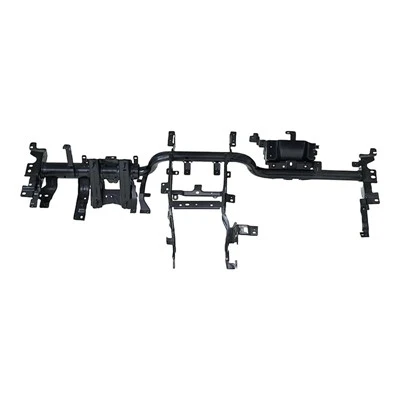
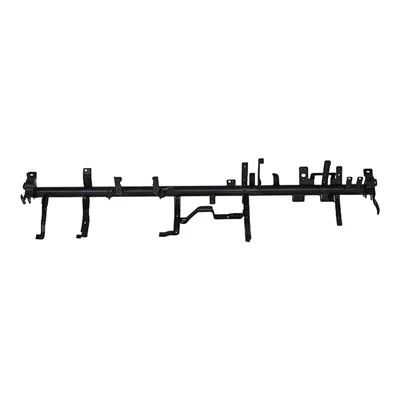
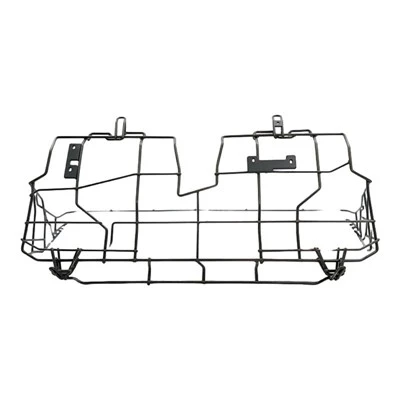
The main body of the seat frame is a welded metal frame, typically made by stamping, bending, and welding together low-carbon steel pipes. The frame is roughly trapezoidal in shape, narrower in the front and wider in the back, lower in the front and higher in the back. The narrower front allows for legroom, while the wider back supports your buttocks. The lower front allows your knees to bend, and the higher back supports your lower back and back. The entire frame resembles a simple chair skeleton, but it's far more complex than a wooden chair at home because it has to bear not your static weight, but the forces exerted by your various awkward postures while in the vehicle.
The two most crucial tubes in the frame are the side rails, also called guide rails-the two long iron tubes extending forward and backward beneath the seat. One end of the side rail connects to the seat frame, and the other end inserts into a sliding rail on the vehicle floor. Adjusting the seat forward or backward relies on the side rails sliding within these rails. The wall thickness of the side rails is typically between 1.5 and 2 millimeters, made from cold-rolled steel sheets rolled into square or round tubes, with an electro-galvanized surface to prevent rust. The side rails not only bear your weight but also the forces exerted by your body sliding forward and backward during vehicle acceleration and braking. During sudden braking, when you're thrown forward, the force on the front end of the side rail is several times your body weight. If the side rail is too thin or the welds are weak, it may deform during sudden braking, making it impossible to return the seat to its original position.
Several crossbars are welded to the side rails. These crossbars connect the seat cushion and backrest frames, creating a unified seat rather than two separate pieces. The position and angle of these crossbars are carefully designed to determine the angle between the thighs and upper body when seated. If the crossbars are welded forward on the side rails, your legs will be raised higher, suitable for shorter individuals. If they are welded backward, your legs will be more level, suitable for long drives. The crossbars are connected to the side rails by welding, and the quality of the welds directly determines the overall rigidity of the seat. Good welds are evenly distributed and full, resembling fish scales; poor welds are incomplete or missing welds, and you can feel them wobbling when you bend them.
The backrest frame is a separate, independent metal structure. The backrest frame is typically a nearly square steel tubular frame, with four tubing forming a rectangle and one or two horizontal reinforcing ribs in the center. The upper part of the backrest frame connects to the headrest support rod, and the lower part inserts into the back of the seat cushion frame. The tubing in the backrest frame is usually thinner than that in the seat cushion frame because the backrest primarily bears the force of your upper body leaning back, not your entire weight. However, the backrest frame requires greater flexibility, as you want it to yield slightly when you lean back, rather than pressing firmly against you. Therefore, the tubing in the backrest frame is made of steel with slightly better flexibility, and the tube walls are thinner to allow for some bending.
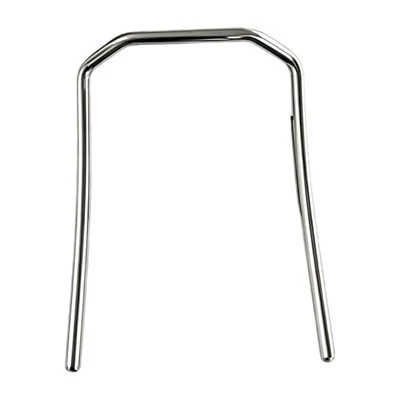
The headrest support rods are two thin steel tubes inserted into the top of the backrest frame, encased in a plastic sleeve. You can adjust the headrest height by pulling it up or down. The bottom of the support rods is secured to the backrest frame by a spring clip. The clip's elasticity keeps the headrest firmly in place at your desired height, preventing it from slipping down. While the headrest support rods seem simple, they are the last line of defense for your neck in a rear-end collision. When a car hits from behind, your body is pushed forward by the seat, and your head will jerk backward. If the headrest support rods are not strong enough, the headrest will collapse, and your neck will directly bear the entire impact force. Therefore, the steel pipes used for the headrest support rods are usually thicker than you might imagine, and the spring tension of the clips is also strictly calibrated. If it's too loose, the headrest will fall off; if it's too tight, you won't be able to adjust it.
Several mounting points for adjustment mechanisms are welded onto the seat frame. The backrest adjustment mechanism is mounted on both sides of the backrest frame and is a gear or lead screw structure. When you turn the lever on the side of the backrest, the gear drives the backrest frame to tilt forward or backward around a horizontal axis. This horizontal axis is a solid steel shaft, with both ends inserted into the side brackets of the seat cushion frame, which are bolted to the seat cushion frame. The gear ratio of the adjustment mechanism and the lead screw lead determine the speed and force with which the backrest tilts down when you turn the handle. A good adjustment mechanism is smooth and even when turned, with moderate damping, allowing the backrest to stop at any angle. A poor adjustment mechanism makes a creaking sound when turned, and the backrest either tilts down too quickly or doesn't tilt down at all.
An arched frame, also called a spring bracket, is welded to the bottom of the seat frame. The bow-shaped frame is a steel tube bent into an arc shape, welded to the side rails at both ends, and protruding downwards in the middle. The coil spring under the seat rests on this bow-shaped frame. The curvature and height of the bow-shaped frame determine the spring's compression stroke and the seat's ground clearance. There are rubber pads at both ends of the bow-shaped frame; the spring presses against these pads instead of directly against the steel tube. These rubber pads act as cushioning and vibration damping, making the spring's elasticity softer and preventing every bump in the road from being directly transmitted to your seat.
All joints of the steel tubes in the frame are treated with electrophoretic coating. Electrophoretic coating involves immersing the entire frame in a paint tank and applying an electric current, allowing the paint to adhere evenly to the surface of every steel tube, including weld joints and gaps. This coating prevents rust, because the frame is inside the seat, and rust is invisible until it's already rusted through the tubes. The thickness of the electrophoretic coating is typically between ten and twenty micrometers; despite its thinness, it can keep the frame rust-free for ten years in humid environments. Some high-end models even add a wax seal over the electrophoretic coating for double protection.
The welding process of the frame is crucial to the lifespan of the seat. There are hundreds of weld points on the seat frame, each enduring repeated vibrations and loads. Poor welding quality will cause these weld points to crack under prolonged vibration, leading to a loose frame. Good seat frames are automatically welded by robots, resulting in uniform weld points and guaranteed strength. Inferior seat frames are welded manually, resulting in inconsistent weld point sizes; some areas are over-welded, burning through pipes, while others are under-welded and not properly secured. When buying a seat, you can secretly check the weld points of the frame; uniform, shiny weld points indicate a good product, while rough, blackened weld points should be avoided.
The logic of the entire seat frame is very clear. The side rails are the foundation, bearing your entire weight and allowing you to slide back and forth. The crossbar connects the seat cushion and backrest, determining your seating angle. The backrest frame supports your upper body, and the headrest support bar protects your neck. The adjustable mechanism allows you to freely adjust your seating posture, while the arched frame supports the springs, determining the seat's elasticity and height. An electrophoretic coating prevents the frame from rusting, and the welding process ensures all connections remain secure. Every time you sit in the car and feel the seat is stable, comfortably firm, and easy to adjust, it's actually the unseen steel frame beneath you silently supporting you. With each welded iron pipe and each tightly secured spring, it catches, distributes, and stabilizes your entire weight, ensuring you don't feel tired no matter how long you sit.