
Main Design Conditions
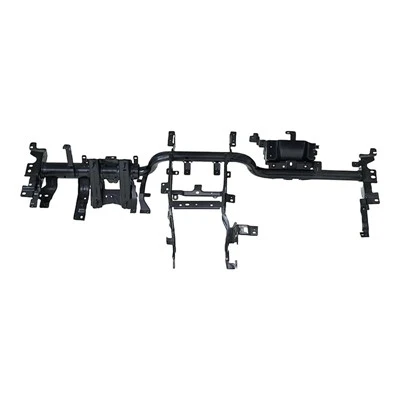
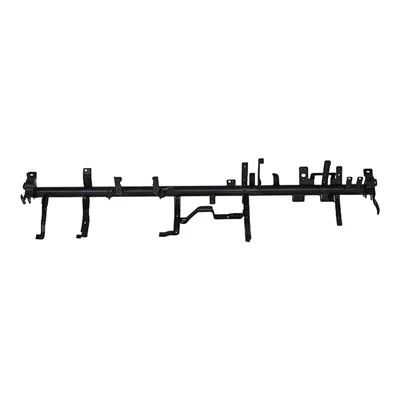
Under the constraints of the vehicle's interior space layout, the CCB structure must first meet the design requirements of each installation interface, while simultaneously improving its rigidity and lightweighting. In the early design of the CCB structure, the overall mode of the column installation and the stiffness of the steering wheel center point are usually important references for measuring the rigidity level of the CCB structure.
The idling frequency of automobile engines is generally between 25-28Hz, and the first-order mode of the instrument panel crossbeam assembly is between 33-35Hz. When the instrument panel and other accessories are installed on the instrument panel crossbeam, the first-order mode decreases by 5%. To avoid resonance , the first-order mode of the CCB and steering wheel column should be above 40Hz.
On the other hand, the column and steering wheel are installed on the CCB structure, and the driver directly contacts the steering wheel. It is necessary to ensure that the deformation of the steering wheel is as small as possible under the control torque; therefore, the deformation of the steering wheel center point under the load is also an important design indicator.
Common Design Methods
(1) In a CCB structure, different parts contribute differently to performance. Targeted design of the more sensitive structure is the most direct and effective design method to improve performance.
According to analysis, in common CCB structures, the influence of each part on the first-order mode and stiffness is not the same. Taking a left-hand drive vehicle as an example, the performance contribution of each substructure of a double-legged CCB is as follows:
It can be seen that the main beam is the most "responsible" structure, followed by the column mounting bracket assembly. Moreover, the left-side bracket and the left leg have a greater impact on performance than the right side. Based on sensitivity design, we can see a thicker main beam, a specially designed column mounting bracket, a reinforced left leg, and a design form where the right leg disappears.
(2) At the same time, topology optimization design is also a commonly used design method. For example, using topology optimization methods to optimize the column mounting bracket structure with a greater impact can achieve lightweight design.
(3) In addition, rapid combination optimization can be achieved through modular and parametric methods. Combining optimization algorithms, rapid optimization design of the structure can be realized.