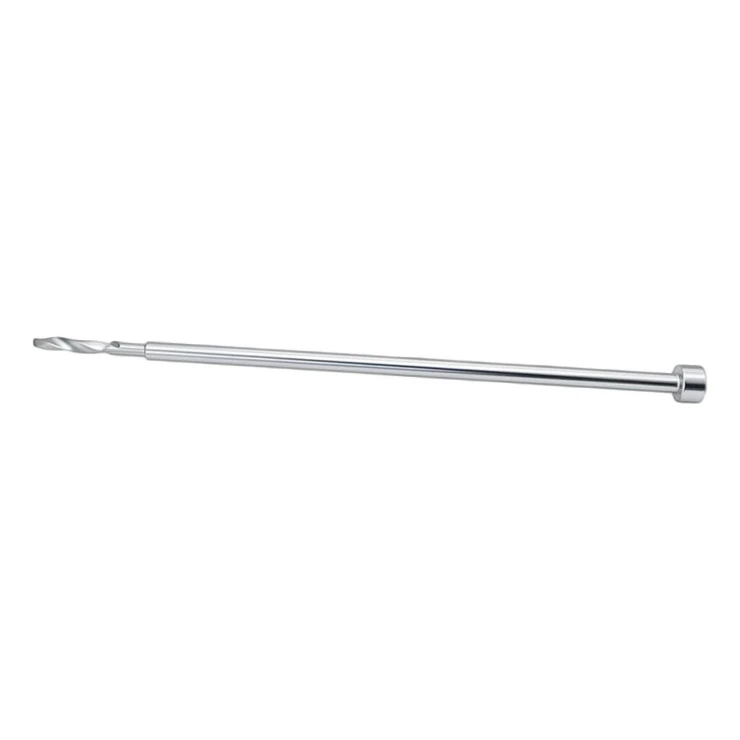

Spot drills and conventional drills differ in several aspects. From a design perspective, spot drills are primarily used to drill positioning recesses on the workpiece surface, providing a precise starting point for subsequent drilling and ensuring accurate drilling position; conventional drills, on the other hand, are used to directly drill complete holes. In terms of tool structure, spot drills typically have a larger point angle, generally between 118° and 135°, to enhance centering capability; the point angle of conventional drills varies between 90° and 140° depending on different machining requirements.
Regarding the cutting edge, spot drills have a shorter and sharper cutting edge, facilitating rapid entry into the workpiece for positioning; conventional drills have a longer cutting edge to meet the needs of continuous drilling. In terms of material selection, spot drills often use high-performance materials such as cemented carbide to improve wear resistance and hardness, adapting to frequent positioning drilling; conventional drills use a variety of materials, selected based on the material being processed and cost. In use, spot drills are generally used in the initial stage of drilling, with a higher rotational speed and a smaller feed rate; with conventional drills, the rotational speed and feed rate are adjusted according to the specific machining conditions during subsequent drilling processes.